

Benetti Sail Division – The Enduring Appeal of Italian-Built Motor Yachts
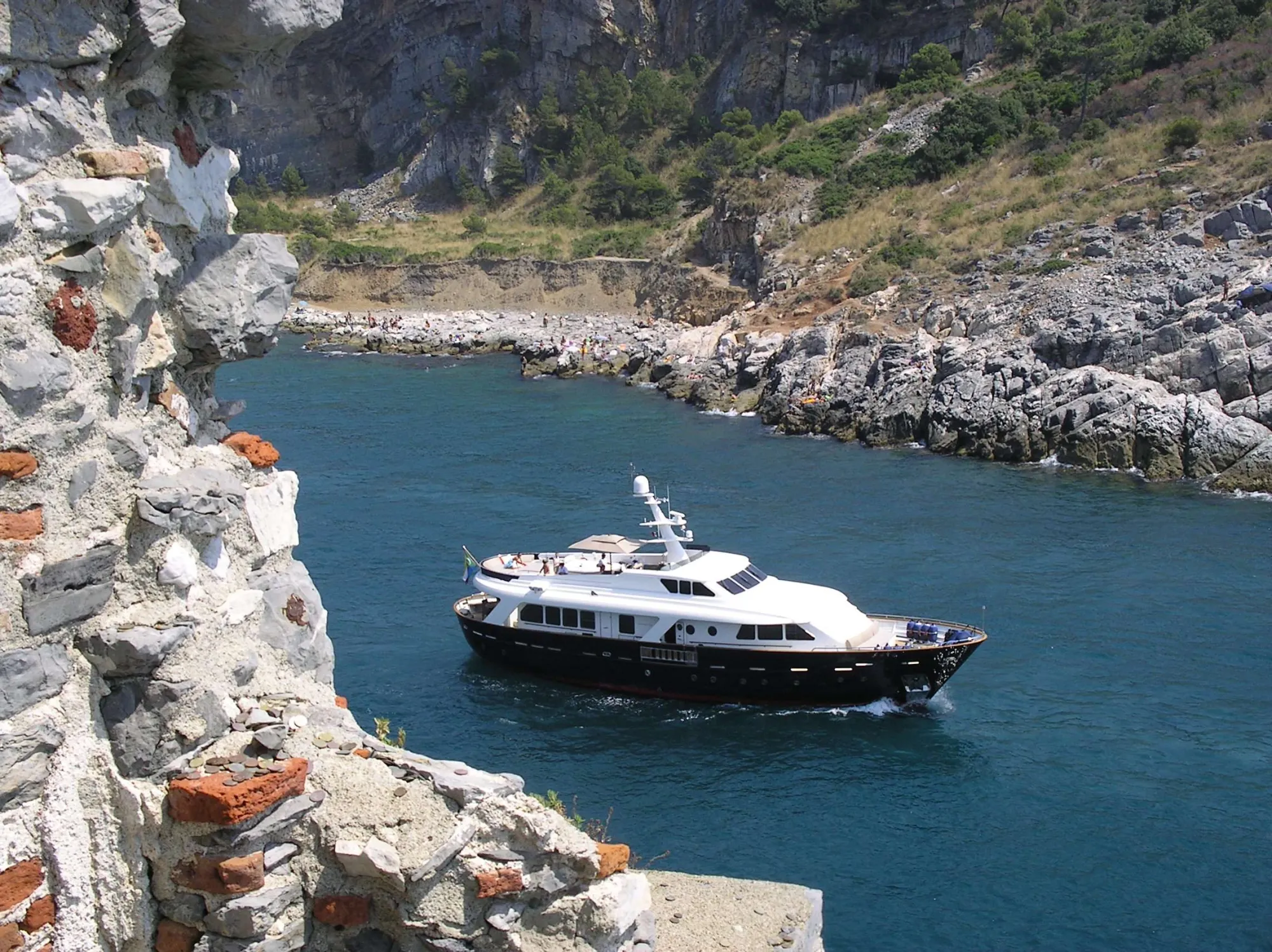
There is something increasingly interesting about yachts that were built before the superyacht industry became dominated by ever-changing styling trends, complex production series and increasingly similar layouts.
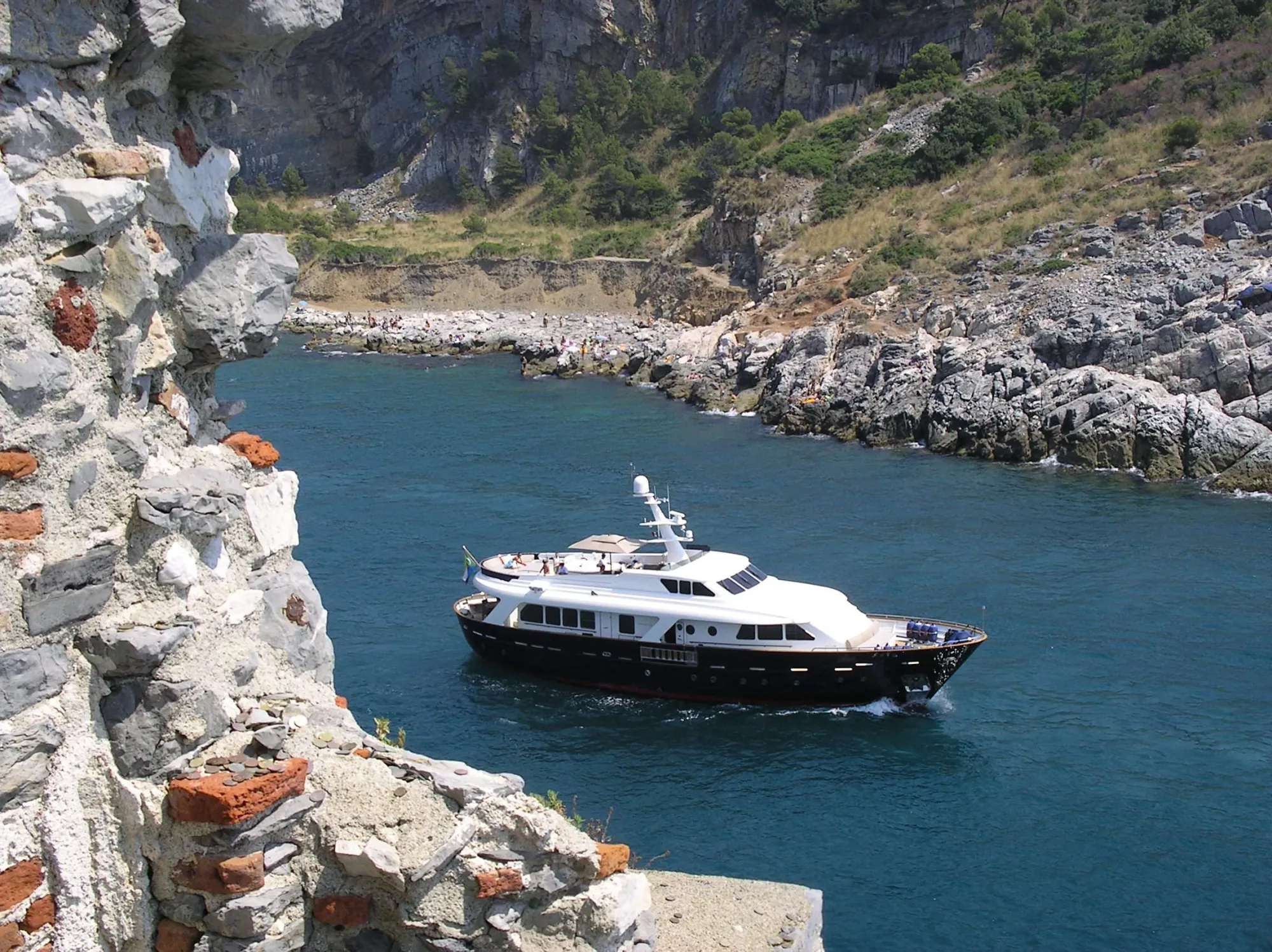
Some yachts simply seem to age differently.
Benetti Sail Division is one of those names.
For owners who value substantial construction, long-range capability, timeless design and genuine individuality, the yachts produced by Benetti Sail Division in Viareggio represent a fascinating chapter in Italian yacht building.
At Skippern Yachts, we currently have three Benetti Sail Division yachts available, spanning different generations and configurations: a 2008 BSD 95 RPH, a 2014 BSD 108 RS and a 2008 BSD 110. Looking at these yachts together gives an interesting insight into what makes the BSD concept so enduring.
A different kind of Italian yacht
The name Benetti is synonymous with Italian superyachts. But Benetti Sail Division followed a somewhat different path from the mainstream production of the larger Benetti shipyard.
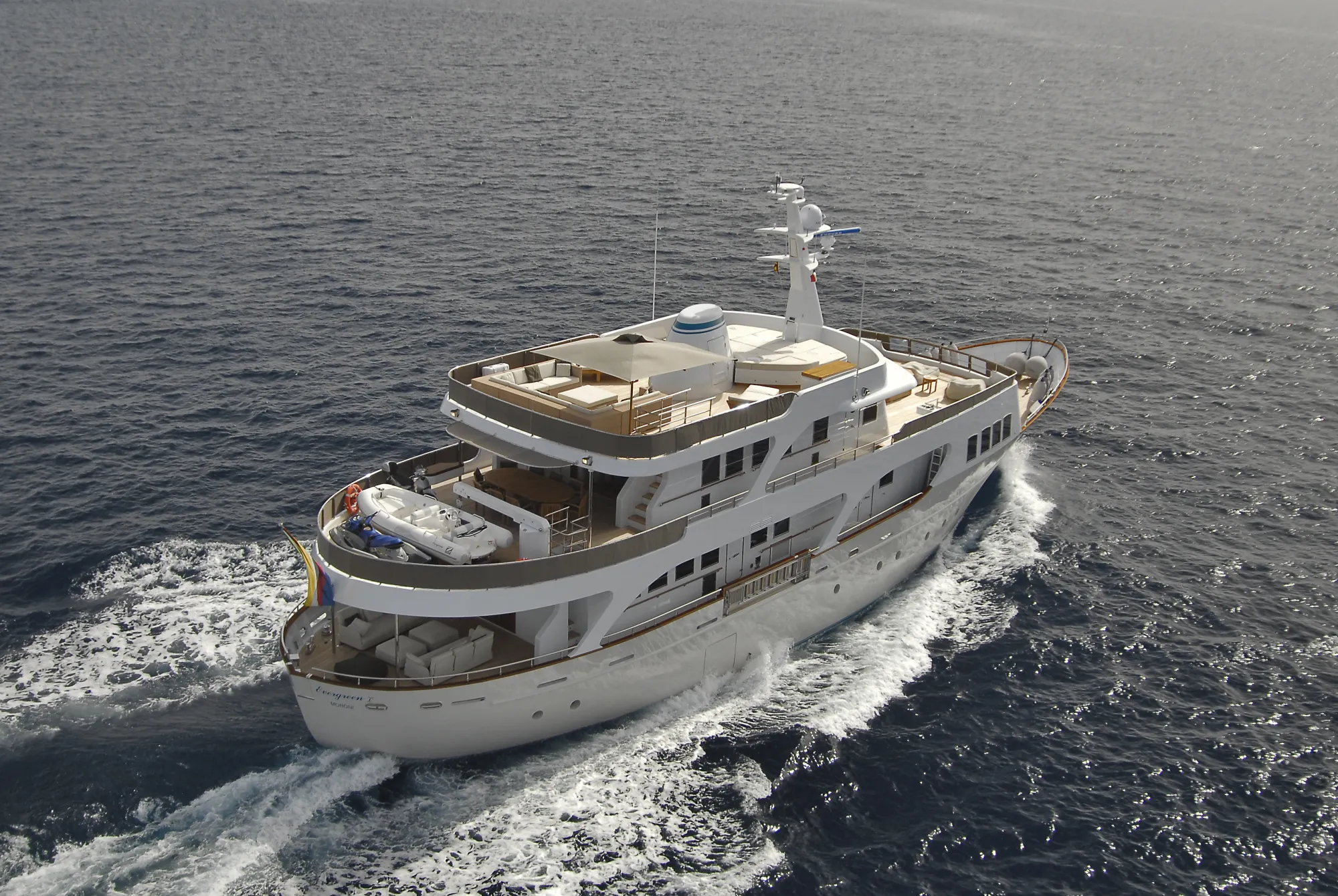
The company had its roots in sailing yacht construction and later developed into a builder of substantial custom and semi-custom motor yachts. During the 1990s and 2000s, Benetti Sail Division became particularly associated with large displacement yachts featuring distinctive rounded or canoe-style sterns. Among the notable yachts from this period were St. Raphael, delivered in 2007, Evergreen in 2008 and Grand Cru in 2009.
The result was a range of yachts that looked and felt quite different from many of their contemporary competitors.
Rather than designing around speed or short-term styling trends, the emphasis was on volume, autonomy, seakeeping, comfort and substantial construction.
That philosophy remains highly relevant today.
Built for distance – not just appearance
One of the defining characteristics of many Benetti Sail Division motor yachts is their displacement-oriented approach.
Steel hulls and aluminium superstructures are found throughout the larger BSD range. This combination provides a substantial hull structure while keeping weight higher up in the vessel under control. A number of contemporary listings and historical examples document this construction philosophy, including BSD yachts with steel hulls and aluminium superstructures.
The significance becomes particularly clear when looking at the boats as cruising platforms.
These are not yachts designed simply to make an impressive entrance into a Mediterranean marina.
Large fuel capacities, relatively moderate cruising speeds, substantial tankage, stabilisation systems and generous technical spaces make many of them naturally suited to extended cruising.
The BSD 95 RPH, for example, carries approximately 35,000 litres of fuel and is specified with a reported range of around 3,000 nautical miles. Her twin Caterpillar engines provide a cruising speed of approximately 10.5 knots.
The later BSD 108 RS takes the concept further, with approximately 45,000 litres of fuel and a reported range of around 3,500 nautical miles at economical speed. She combines a steel displacement hull with an aluminium superstructure and RINA classification.
These numbers tell an important story.
The boats were conceived around distance and independence, rather than simply maximum speed.
Timeless design has a practical value
Styling is, of course, subjective.
But there is a difference between a yacht that looks old and a yacht that looks timeless.
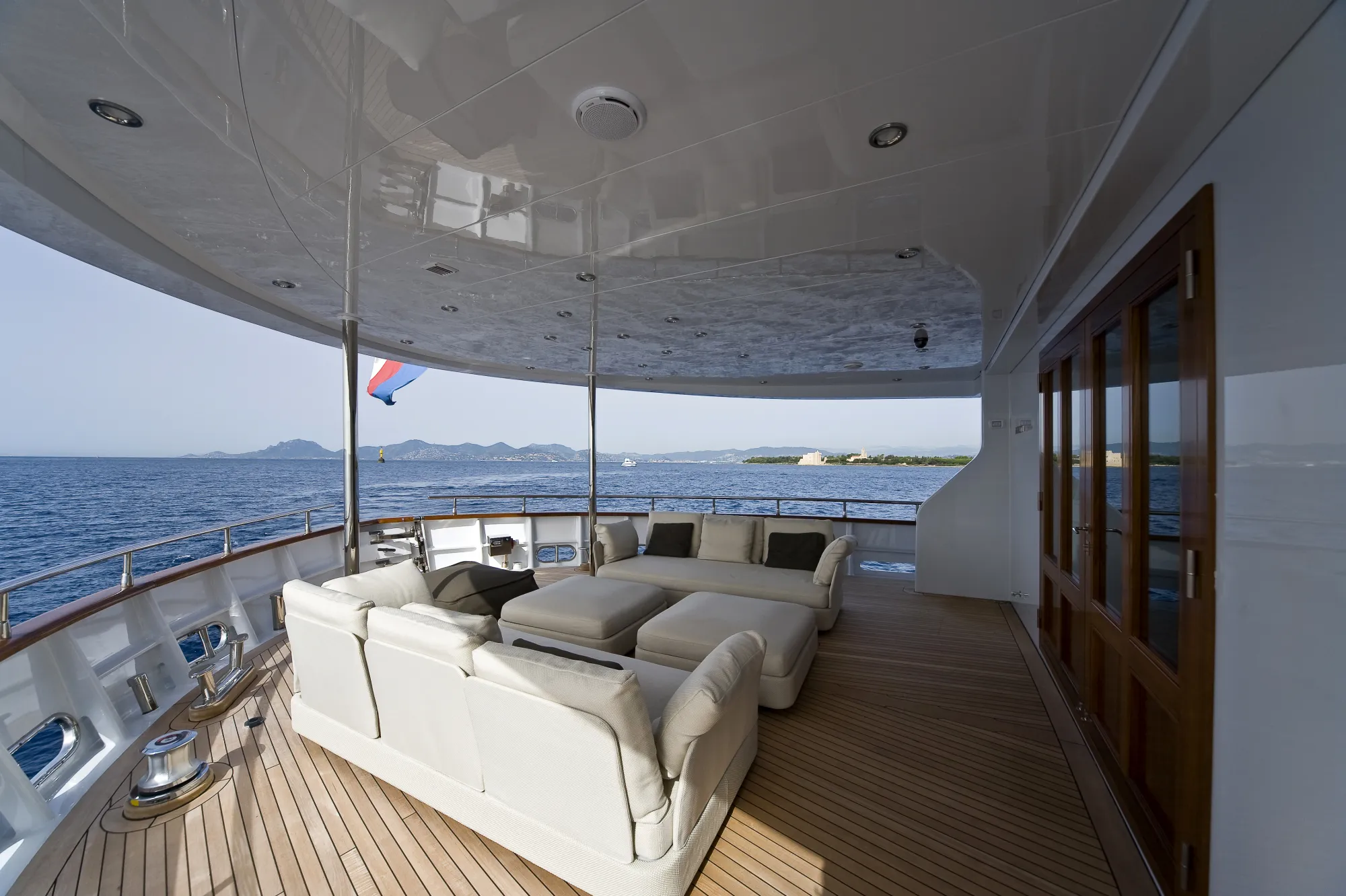
Many BSD yachts have a visual character that comes from their proportions rather than from fashionable design details. Raised pilot houses, generous hull volumes, large windows, substantial deck areas and the characteristic rounded sterns give them a distinctive identity.
They don’t necessarily try to look like the newest yacht in the marina.
And that can be an advantage.
A well-designed yacht can remain visually relevant for decades because its fundamental proportions continue to work. The same principle can be seen in classic automobiles, traditional sailing yachts and some of the great motor yachts of the past.
In the BSD range, the emphasis on proportion and volume has helped create yachts that still have presence many years after their launch.
The value of a proper refit
Another characteristic of these yachts is their ability to evolve.
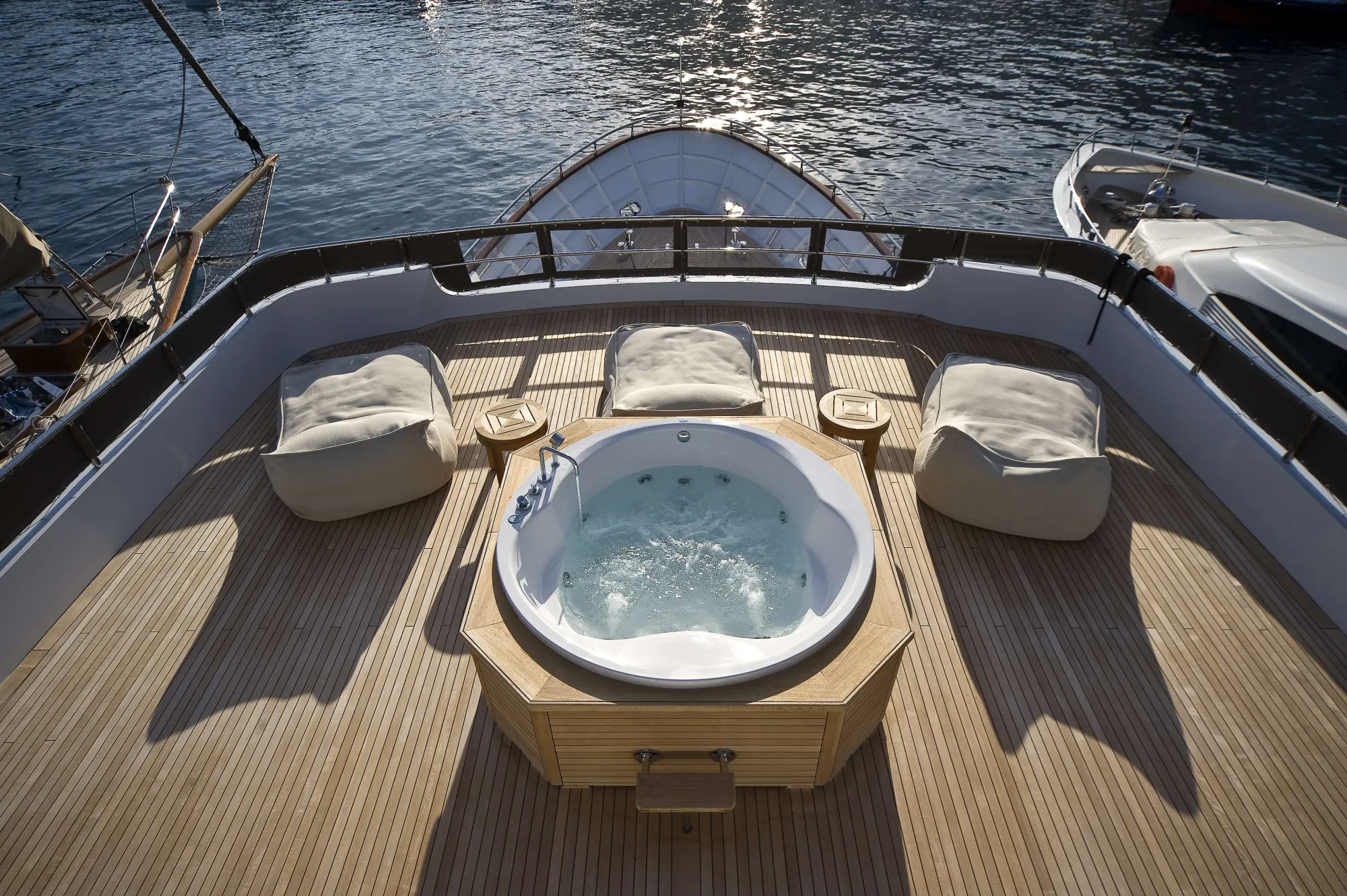
A yacht built 15 or 20 years ago inevitably contains equipment that has become obsolete. Navigation systems, communications, entertainment, air-conditioning, lighting and domestic equipment can all be upgraded.
The underlying yacht, however, remains.
This is particularly evident with the BSD 95 RPH currently offered by Skippern Yachts. Built in 2008, she underwent an extensive refit in 2020 while retaining the character of her original custom construction. She combines classic Italian styling with modernised systems and relatively low engine hours.
The BSD 110 provides another good example.
Built in 2008, she has received substantial technical investment, including work on propeller shafts, bearings and bushes, propellers, rudder bearings, bow thruster, stabilisers, teak decks, air-conditioning and navigation equipment. Ultrasonic thickness measurements were also carried out in 2022.
This is one of the reasons experienced yacht buyers sometimes look beyond the newest launches.
A well-built yacht with a strong underlying structure can be renewed rather than replaced.
Three BSD yachts, three different interpretations
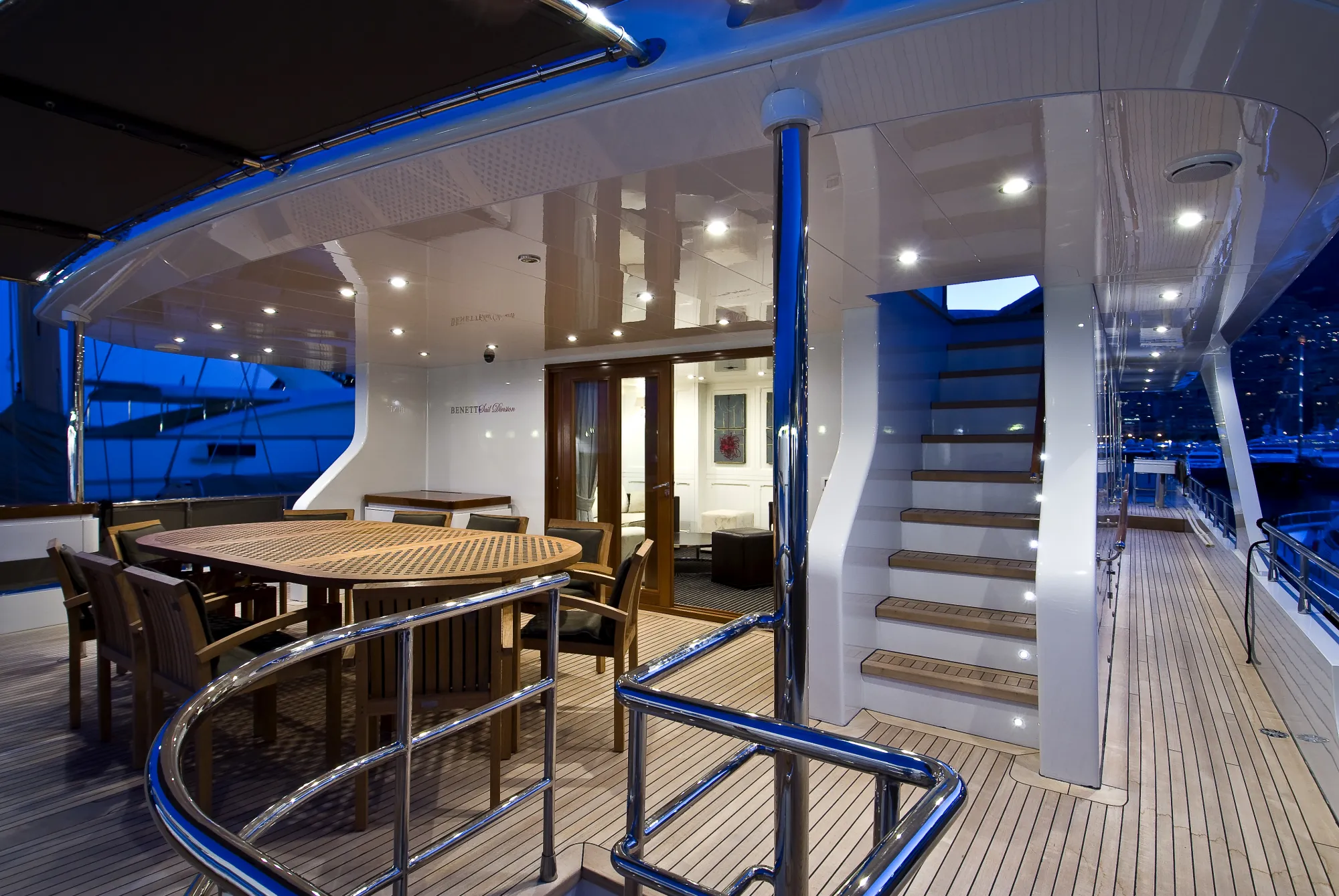
Our three current Benetti Sail Division listings illustrate this particularly well.
BSD 95 RPH – classic Italian character
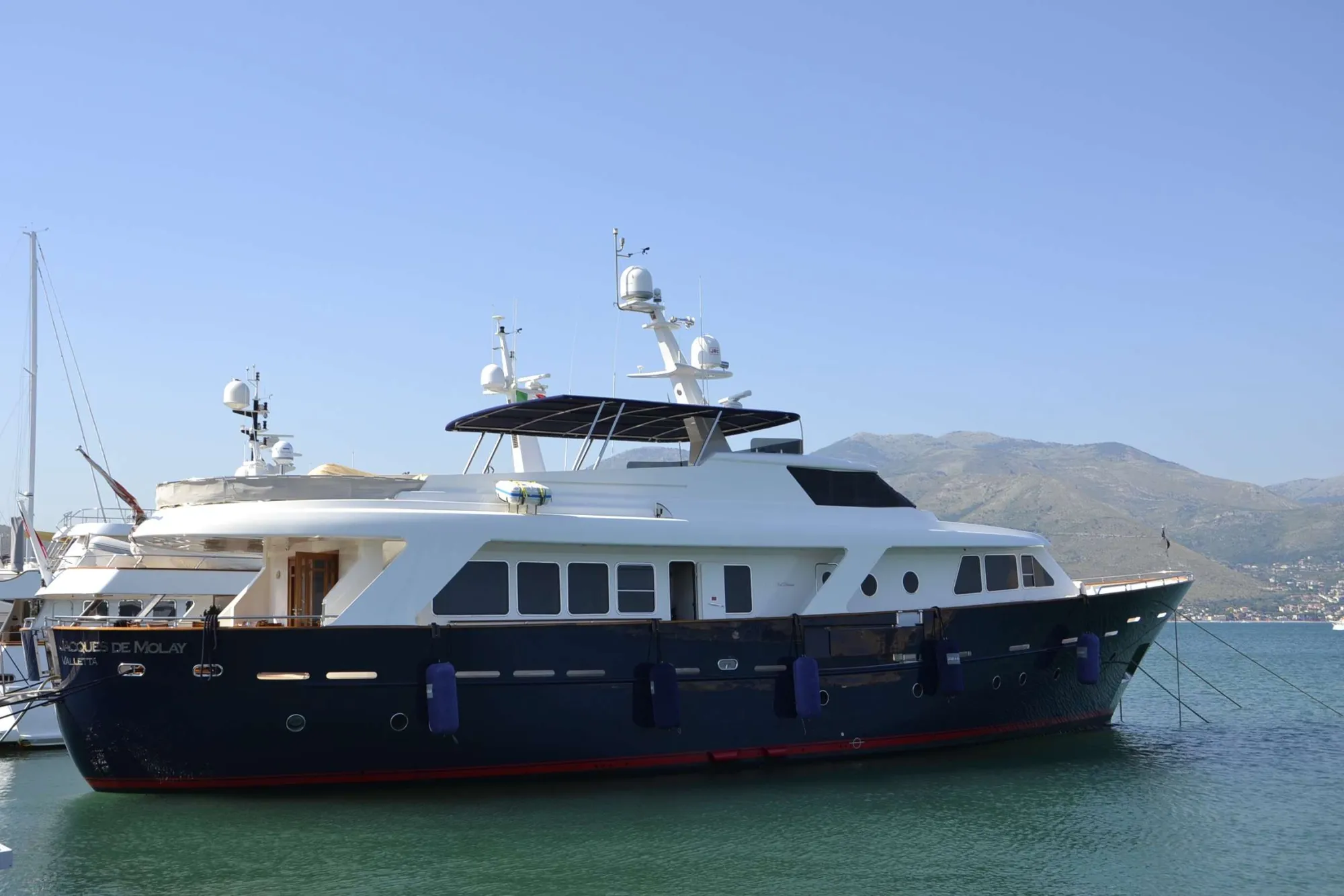
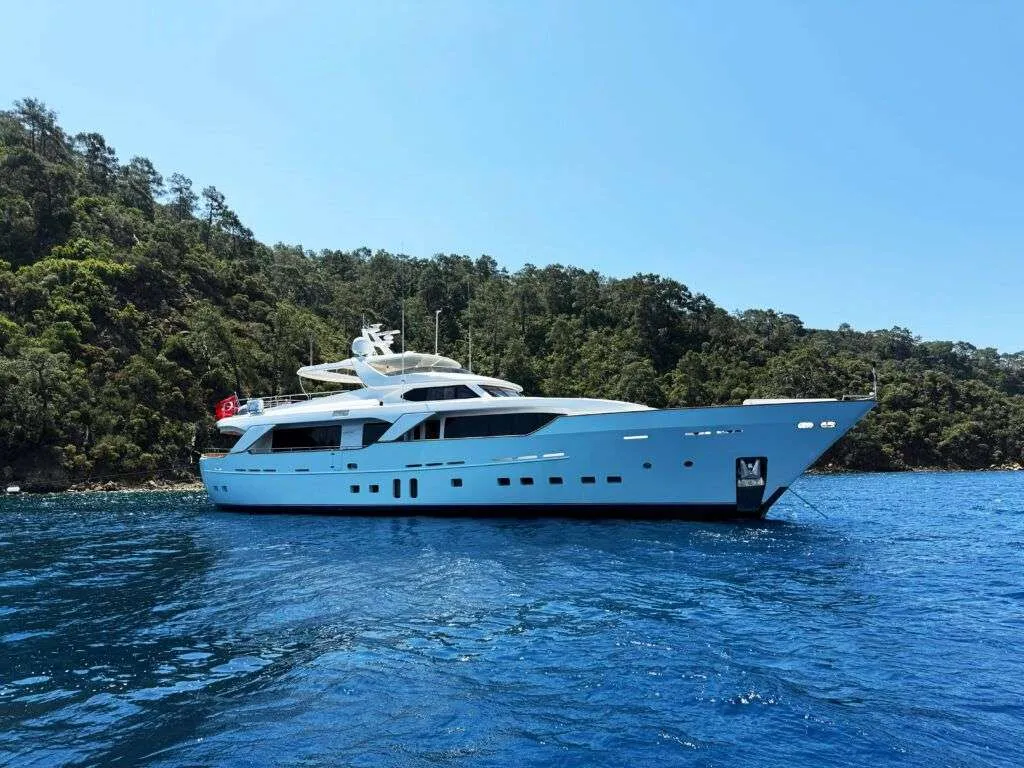
The BSD 95 Raised Pilot House is a 29.6-metre yacht built in 2008 and extensively refitted in 2020.
She represents the more traditional side of the BSD philosophy: classic lines, generous accommodation, substantial tankage and a relatively economical cruising profile.
Her raised pilot house gives the yacht a distinctive silhouette, while the interior combines traditional yacht character with the facilities expected from a modern cruising vessel.
Benetti Sail Division 95 RPH – Skippern Yachts
BSD 108 RS – long-range capability
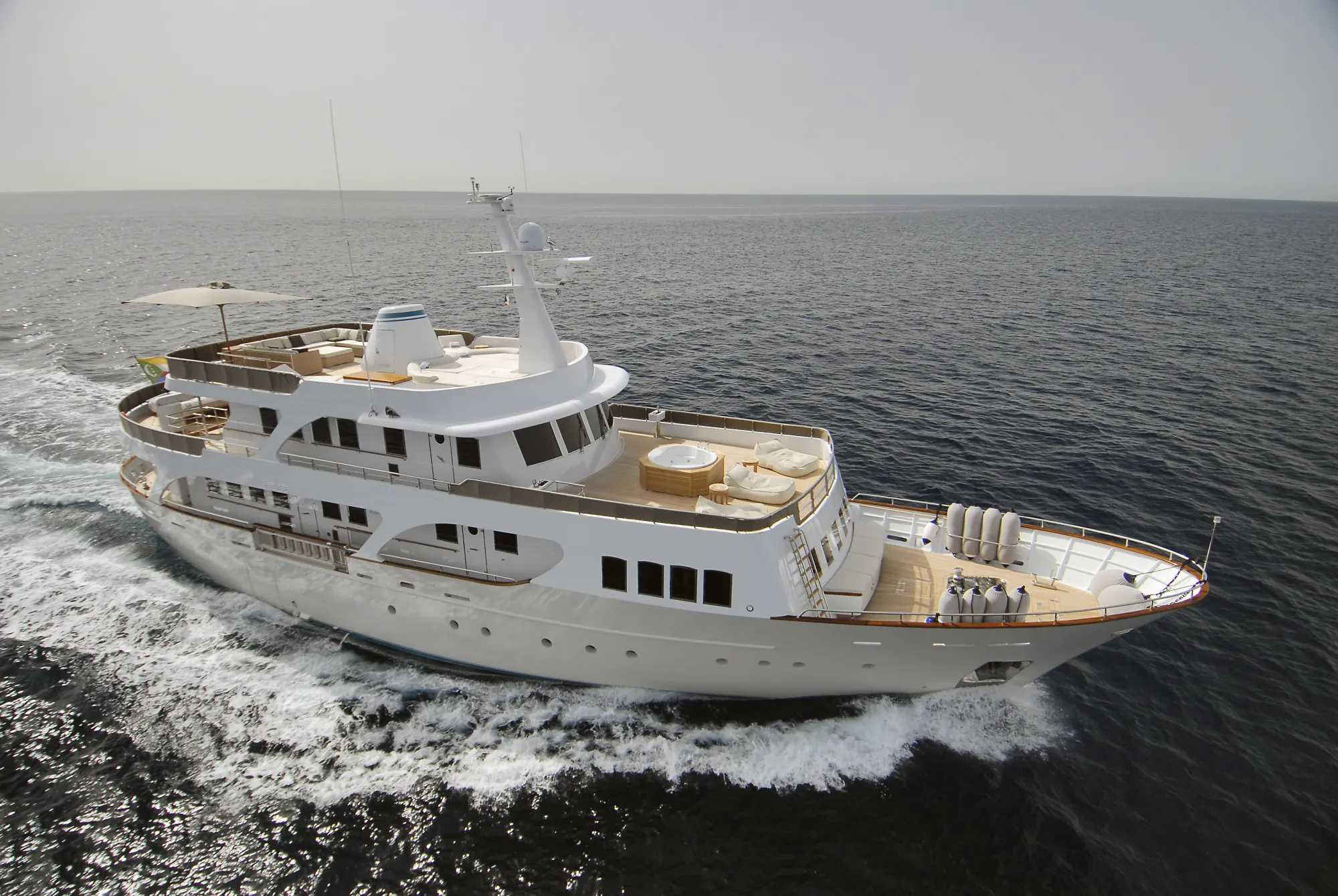
The BSD 108 RS, built in 2014, demonstrates how the concept developed into a sophisticated long-range motor yacht.
At approximately 31.5 metres, with a 7.2-metre beam, steel hull, aluminium superstructure, stabilisers and substantial tankage, she is clearly designed around comfortable independent cruising.
The yacht has been privately owned from new and has never been chartered, according to the current listing. Her specification includes twin 1,000 hp MAN engines and approximately 3,500 nautical miles of reported range at economical speed.
Benetti Sail Division 108 RS – Skippern Yachts
BSD 110 – substantial volume and proven systems
The BSD 110 is another 2008 example, at approximately 33.5 metres.
What stands out on this yacht is the combination of size, volume and continued technical investment. Her specification includes substantial fuel and water capacity, zero-speed stabilisation, a 50 kW Rodriquez bow thruster and extensive Furuno navigation and communication equipment.
The extent of the recent technical work is also notable. Propeller shafts, bearings and bushes were replaced, propellers balanced, rudder bearings renewed, teak replaced in several areas and the air-conditioning system renewed.
Benetti Sail Division BSD 110 – Skippern Yachts
Why these yachts remain relevant
Perhaps the most interesting question is not why these yachts were attractive when they were new.
It is why they remain interesting today.
The answer is found in the fundamentals.
Construction.
Volume.
Seakeeping.
Range.
Maintainability.
Proportion.
Individuality.
These are characteristics that do not become obsolete in the same way that electronics or interior fashions do.
A navigation system can be replaced. An air-conditioning plant can be renewed. Teak can be replaced. Generators can be overhauled.
But the underlying hull, naval architecture, proportions and structural philosophy are much more difficult to change.
That is why the original specification and construction quality of an older yacht matter so much.
A yacht is more than its launch year
In today’s market, it is easy to become focused on the year of construction.
But a 2008 yacht that has been properly maintained, technically updated and structurally inspected can offer a very different proposition from another 2008 yacht that has received little investment.
The same applies to a 2014 yacht.
For experienced buyers, the more useful question is often:
What yacht is actually here today?
What has been replaced?
What has been upgraded?
How has the yacht been used?
How has it been maintained?
What does the structural inspection show?
How has the machinery been cared for?
And, perhaps most importantly, does the original design still make sense for the way the next owner intends to use the yacht?
With Benetti Sail Division, there is a particularly strong argument for asking those questions.
Because these yachts were built around fundamentals that remain relevant.
The enduring appeal of the BSD philosophy
The modern superyacht market continues to produce extraordinary yachts, with ever more sophisticated technology, spectacular interiors and increasingly adventurous designs.
But there will always be owners who want something different.
They want to cross an ocean rather than simply cross a bay.
They want a yacht that feels substantial under their feet.
They want generous technical spaces, serious tankage and a hull designed for comfortable passage-making.
And they want something with an identity that does not depend on being the newest yacht in the harbour.
That is where Benetti Sail Division becomes particularly interesting.
The boats may come from another era of yacht building, but the underlying philosophy remains surprisingly contemporary:
Build a substantial yacht. Give it range. Give it volume. Give it character. And build it so that it can still be relevant many years later.
That, ultimately, may be the most compelling part of the Benetti Sail Division story.
Not nostalgia.
Endurance.